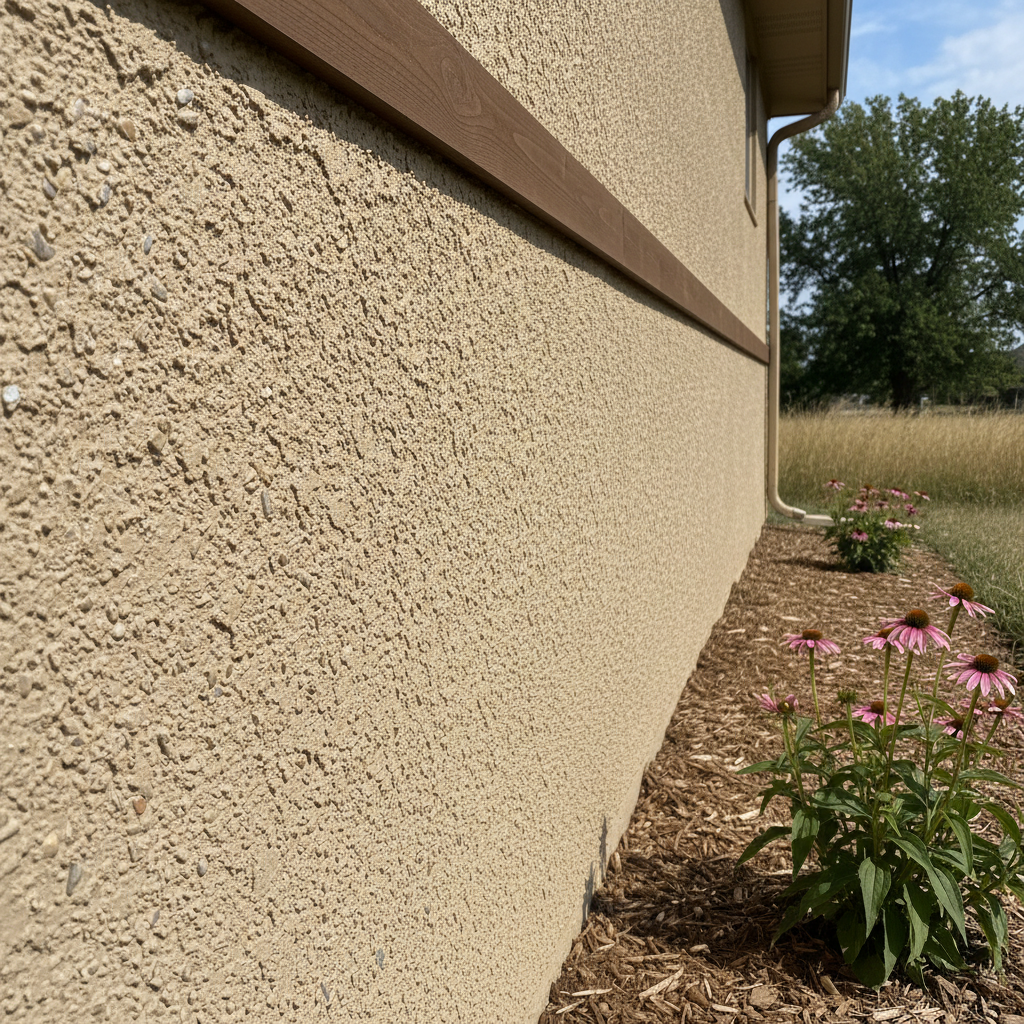
Heavy spring thunderstorms roll across Sedgwick County and bring a lot of moisture to homes with exterior stucco walls. The climate in Wichita, Kansas involves brutal summer heat and freezing winter winds. These weather conditions affect exterior stucco walls on houses in Wichita, KS. Stucco looks tough, but water can find a way inside the walls if homeowners do not monitor the exterior surfaces closely.
Before You Start Looking
Homeowners do not need a large amount of expensive gear to check their own exterior stucco walls. A flashlight, a notepad, and a sturdy step ladder are enough for houses in neighborhoods like Reflection Ridge in Wichita, Kansas. Walk the entire perimeter of the house to inspect the exterior. Look closely at the ground clearance where the stucco meets the concrete foundation or the landscaping. Wichita clay soil holds onto moisture after it rains. If stucco sits directly down in the dirt, moisture will enter the wall system. Homeowners need to maintain at least six to eight inches of clearance between the bottom of the stucco wall and the dirt.
During the Walkthrough: What You Can Do
Start scanning the stucco surface for anything that looks out of place on the exterior walls. The checklist below shows what to look for during a stucco inspection in Wichita, Kansas:
- Hairline cracks around window corners and door frames.
- White, powdery buildup on the stucco surface, which is usually efflorescence pushing through from trapped moisture.
- Staining or dark streaks running downward from roof lines or windows.
- Soft spots or areas that sound hollow when you gently tap the stucco with the handle of a screwdriver.
Cracking around windows happens frequently in Wichita because houses shift slightly as local clay soil expands and shrinks with moisture levels. A tiny crack is a doorway for water to enter the stucco system.
When to Call a Professional Stucco Contractor
There is a clear line between what homeowners can spot themselves and what requires professional stucco diagnostics in Wichita, Kansas. If you see bulging walls, large cracks wider than a credit card, or dark, spongy patches near the base of the wall, professional help is necessary. Water has likely gotten behind the stucco cladding and is rotting the wood framing underneath. Wichita Stucco & Plastering uses thermal imaging and electronic moisture meters to see what is happening beneath the surface without tearing exterior walls apart blindly. Fixing a small sealant failure today prevents the need to replace rotted studs next year.